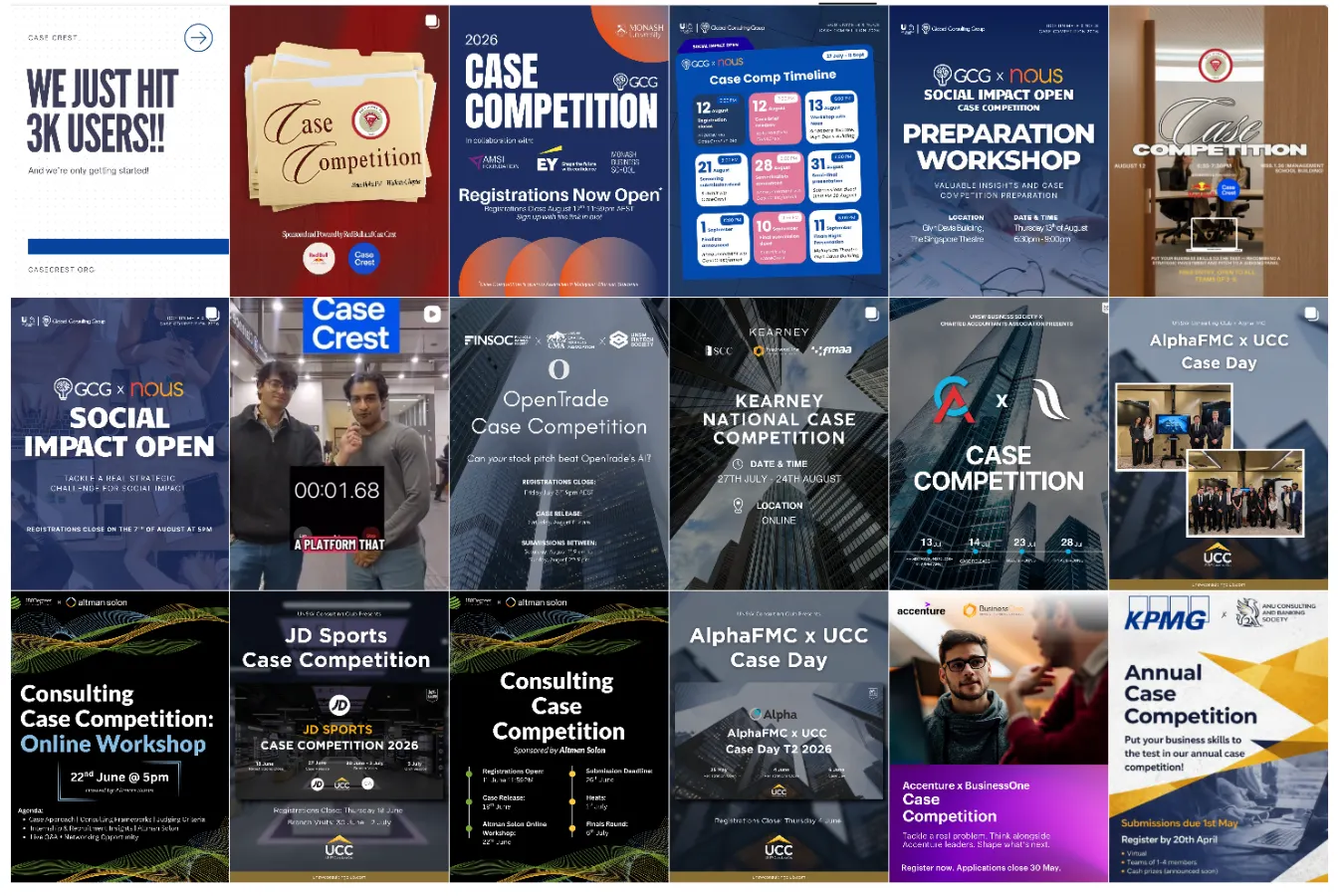
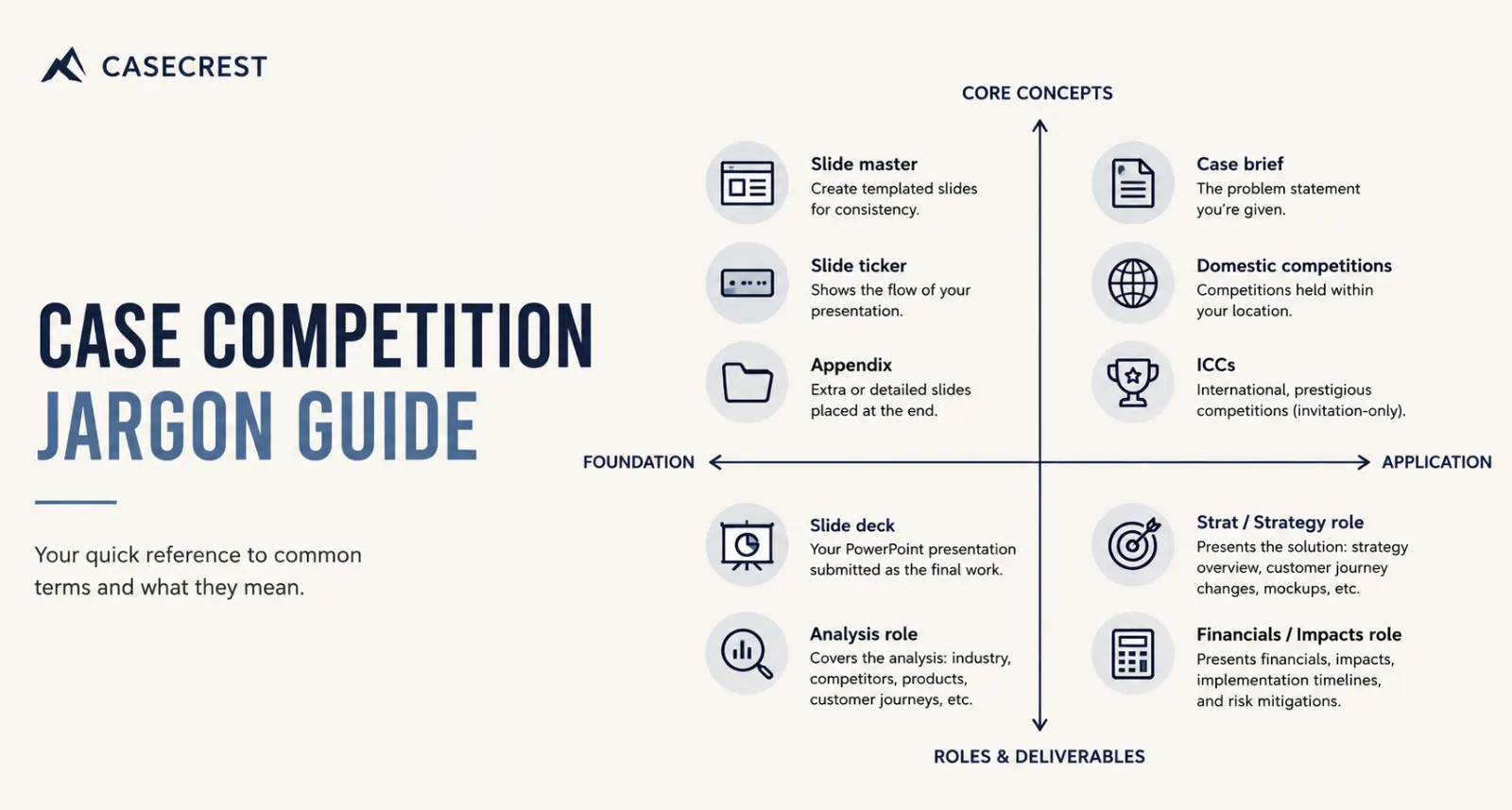
Case competitions are team-based activities, generally run by university societies/clubs or by organisations/companies as well. They generally require you to participate in teams of 3 to 4, in which you solve a business problem of some kind called a case brief. Once you've solved it, you then submit a slide deck, which can be a PowerPoint presentation or something similar, which is marked by judges.
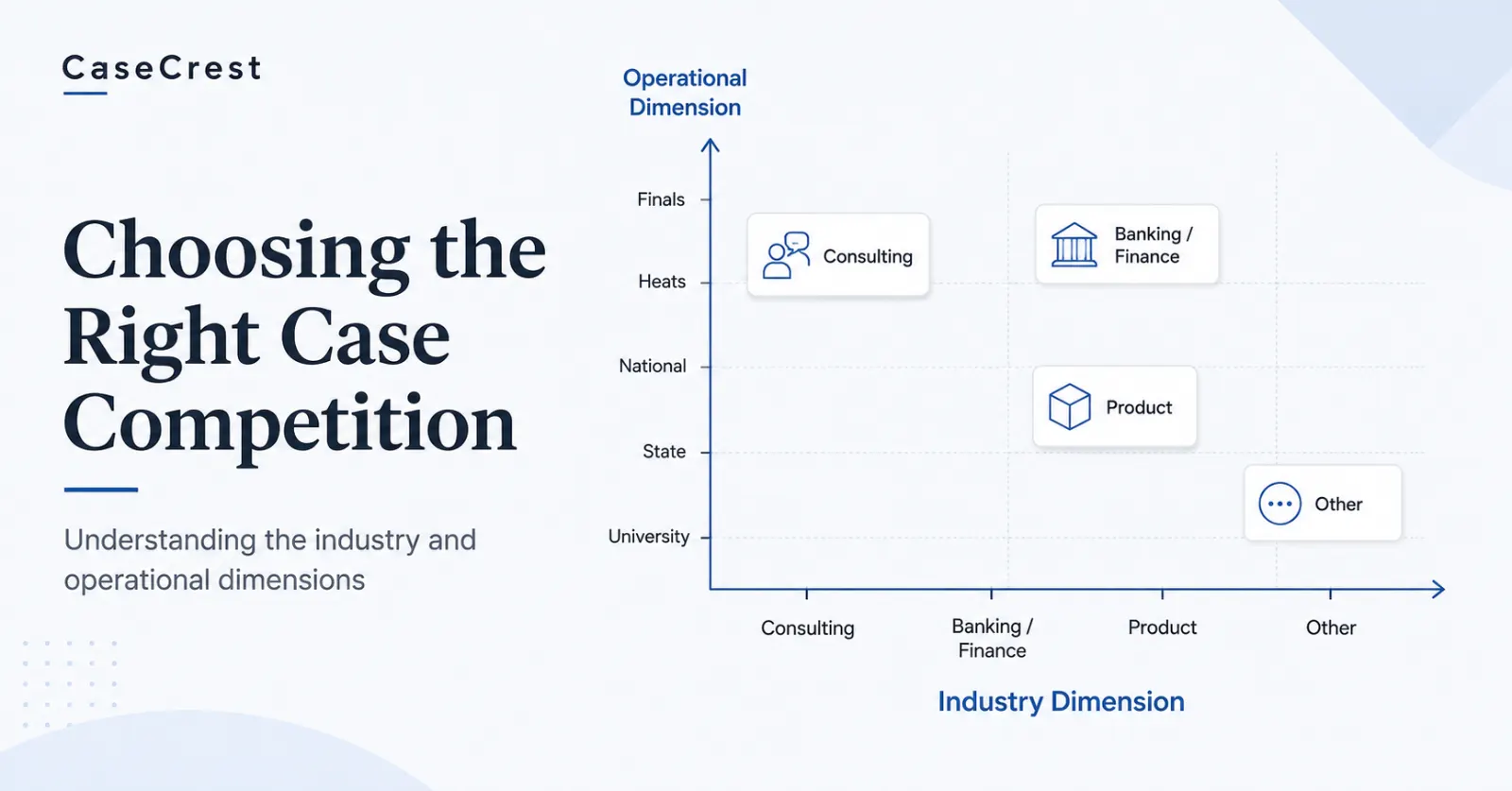
Based on how well you solve the problem and meet the marking rubric (if there is one included), you are then able to progress to later rounds which mostly consist of heats and a finals. During these rounds you present to judges who are generally industry professionals or organiser representatives.
If you win or place in finals, you will get prizes that could range from internships, money, coffee chats, networking dinners or other in kind prizes. For example, during the UNSW Business Society Nespresso Case Competition, students won an actual Nespresso machine, which is absolutely awesome!
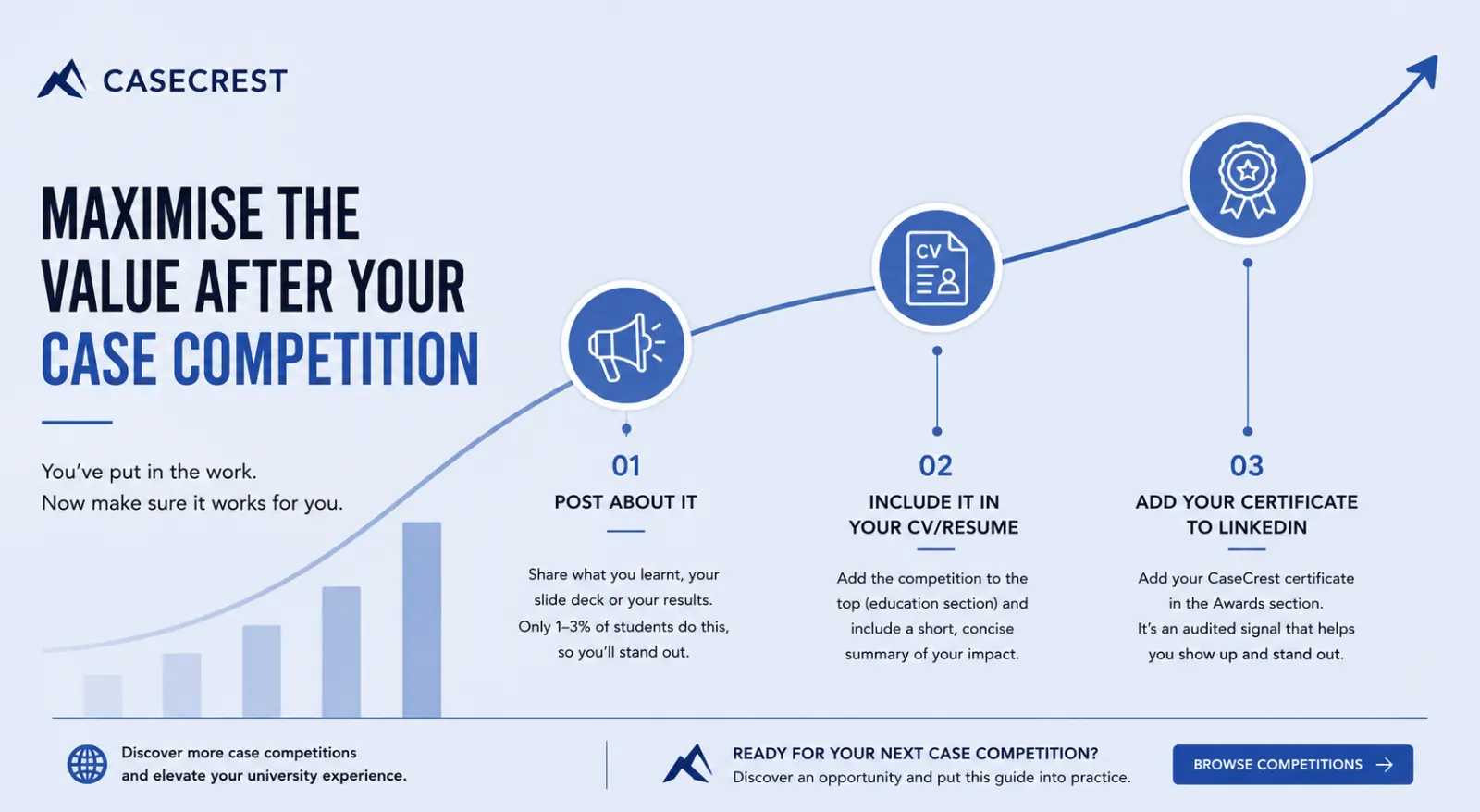
Ultimately case competitions are a great way to build your portfolio and line items on your CV/Resume, especially if you're a new student without any relevant work experience. To find case competitions, you can follow the link below, which will show you all the current case competitions available in your region.
If you have any questions, please reach out to raj.subbanna@casecrest.org. Feel free to get in touch via LinkedIn as well and ask me any questions if the resources on our website don't answer them for you.